
BISP Welfare Program: Empowering Women and Reducing Poverty in Pakistan
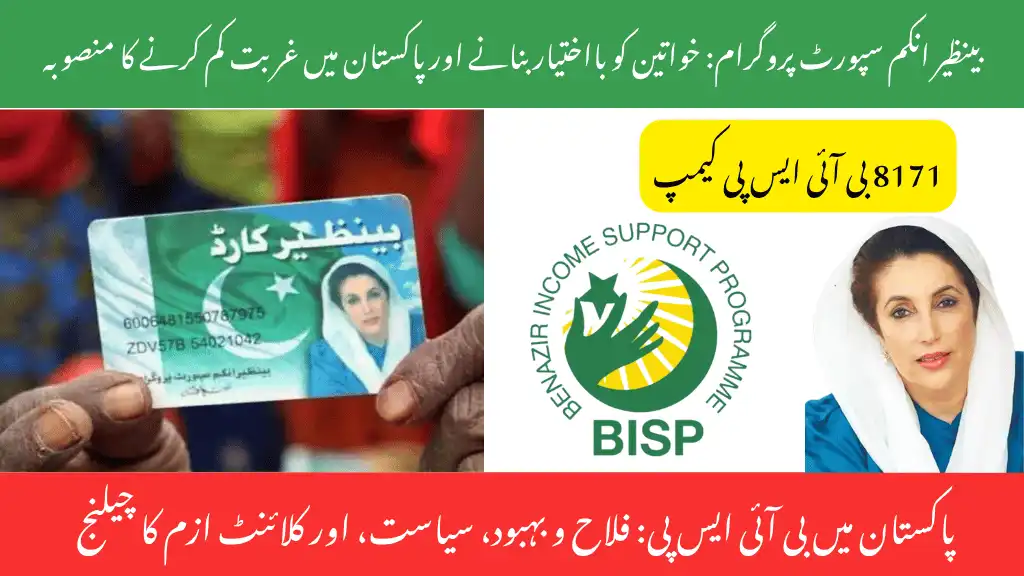
The BISP Welfare Program is Pakistan’s largest social protection initiative, designed to reduce poverty and empower women through direct financial assistance. Introduced in 2008 by the Pakistan People’s Party (PPP) during a period of inflation and food insecurity, it sought to deliver cash support to low-income families nationwide.
Over the years, this welfare initiative has become both a lifeline for millions and a symbol of political power, blending humanitarian goals with complex political realities. The program’s evolution tells the story of how welfare, politics, and governance intersect in modern Pakistan.
What Are the Key Facts About the BISP Welfare Program in 2025?
| Features | Details |
| Program Name | Benazir Income Support Programme (BISP) |
| Launch Year | 2008 |
| Founded By | Pakistan People’s Party (PPP) Government |
| Core Purpose | Poverty reduction through unconditional cash transfers |
| Beneficiaries | Over 9 million women-led households |
| Key Reform | Poverty Scorecard & Biometric Verification |
| Linked Programs | Ehsaas Program, 8171 Web Portal, BISP Taleemi Wazifa |
| Annual Budget (2025) | Approx. PKR 450 billion |
| Major Challenge | Political influence and clientelism |
What Are the Historical Origins of the BISP Welfare Program?
Named after Benazir Bhutto, Pakistan’s first female Prime Minister, the program embodied her vision of social justice and female empowerment. In its early phase, assistance was unconditional families received support regardless of school attendance or employment. Payments were issued directly to women, helping them gain decision-making power within patriarchal households.
However, the distribution process quickly revealed flaws. Parliamentarians had a role in selecting beneficiaries, which opened the door to political bias.
- Families from PPP-aligned constituencies often received priority.
- Opposition areas saw limited coverage.
- Regional imbalances emerged in allocation.
This early politicization reflected the roots of clientelism, where welfare benefits are exchanged for political loyalty rather than distributed by need.
How Did the Poverty Scorecard Reform Improve BISP Transparency?
To counter favoritism, the government launched a groundbreaking reform in 2009 the Poverty Scorecard. This nationwide survey assessed income, assets, and living standards to determine eligibility, replacing political nominations with measurable criteria.
Key outcomes of the reform:
- Eliminated political influence from beneficiary lists.
- Created a national database verified through NADRA.
- Strengthened public confidence in fair targeting.
According to the World Bank Social Protection Review (2023), this reform increased targeting accuracy by over 85 percent, setting a precedent for data-driven welfare delivery across South Asia.
The BISP Welfare Program thus shifted from patronage-based selection to evidence-based social protection, earning credibility both domestically and internationally.
How Does Clientelism Affect the BISP Welfare Program?
Clientelism refers to the use of public resources to reward political supporters. Despite improvements, Pakistan’s welfare sector still bears traces of it.Within the BISP Welfare Program, certain trends demonstrate ongoing political influence:
- Politicians frequently highlight the program in election campaigns.
- Some beneficiaries view assistance as a favor, not a right.
- Coverage sometimes increases in ruling-party regions during elections.
This intertwining of welfare and politics shows how state aid can become political capital, challenging the neutrality of social policy.
How Reforms Strengthened the BISP Welfare Program
Major structural and technological reforms introduced after 2018 strengthened transparency and efficiency:
Biometric Verification System (BVS)
Payments now require biometric authentication via NADRA, eliminating ghost recipients.
Digital Payment Platforms
Collaboration with EasyPaisa, JazzCash, and major banks enabled secure digital disbursements, reducing manual corruption.
Dynamic Survey (8171 Web Portal)
Citizens can verify or update eligibility online, fostering transparency and inclusion.
Third-Party Auditing
Regular evaluations by the World Bank, UNDP, and Oxford Policy Management ensure accountability.
Through these initiatives, the BISP Welfare Program evolved from a politically managed scheme into a data-driven, citizen-centered welfare system.
What Is the Social Impact of the BISP Welfare Program?
The social outcomes of BISP are far-reaching. According to the UNDP Poverty Impact Report (2024), more than 9 million households have benefited, and around 2.4 million families have moved above the extreme poverty line.
Notable impacts:
- Poverty Reduction: Regular cash support stabilizes household income.
- Women’s Empowerment: Over 90 percent of recipients are women, fostering independence.
- Food Security: Families report better nutrition and reduced hunger.
- Education: Conditional stipends under BISP Taleemi Wazifa promote school attendance.
These outcomes demonstrate that the BISP Welfare Program is more than a cash-transfer initiative. It is a catalyst for economic resilience and gender equality.
How Does the BISP Welfare Program Compare Globally?
| Country | Program | Political Dynamics | Welfare Outcome |
| Pakistan | BISP | Political symbolism, clientelism | Poverty reduction, women’s empowerment |
| Brazil | Bolsa Família | Boosted ruling-party popularity | Major poverty decline |
| Mexico | Oportunidades | Electoral influence observed | Improved education & health |
| India | MNREGA & Subsidies | Regional favoritism | Greater employment & schooling |
| Kenya/Ghana | Cash Transfers | Politically selective | Moderate poverty reduction |
The comparison reveals that politicized welfare is a global reality. Success depends not on erasing politics entirely but on building institutions strong enough to withstand political manipulation.
How Is Technology Making the BISP Welfare Program
Modernization has become central to the BISP Welfare Program. The integration of digital systems enhances transparency, efficiency, and accessibility.
Key innovations:
- Biometric ID Verification to confirm beneficiary identity.
- Mobile Banking and ATM Payments for quick, traceable disbursements.
- Central Poverty Database that synchronizes national data with provincial records.
- AI-Driven Poverty Mapping (in testing) to identify future hotspots of need.
Digital governance ensures that aid reaches the deserving, aligning Pakistan’s social protection goals with the UN Sustainable Development Goals (SDGs) on poverty and equality.
What Role Does Civil Society Play in BISP Oversight?
A credible welfare system thrives on citizen participation. Civil society organizations, journalists, and community leaders all contribute to keeping BISP transparent.
- Community Monitoring Groups verify local beneficiary lists.
- Investigative Media exposes misuse and raises awareness.
- Public Awareness Campaigns inform citizens that assistance is their right, not political charity.
This culture of engagement strengthens accountability and helps transform welfare from dependency into empowerment.
What Challenges Does the BISP Welfare Program Face Ahead?
Even in 2025, several challenges persist:
- Political Branding: Association with Benazir Bhutto continues to give the program a partisan image.
- Clientelistic Perceptions: Some communities still see benefits as linked to ruling parties.
- Targeting Accuracy: The Poverty Scorecard needs periodic updates to reflect economic realities.
- Dependency Culture: Continuous aid may discourage self-reliance if not paired with livelihood programs.
- Data Security: Digital expansion demands strict privacy safeguards.
Meeting these challenges will determine whether the BISP Welfare Program achieves full neutrality and sustainability.
What Is the Future of the BISP Welfare Program?
Looking forward, Pakistan aims to transform BISP into a rights-based, technology-enabled social protection system. Future priorities include:
- Establishing independent oversight boards to minimize ministerial influence.
- Strengthening collaboration with the Ehsaas Program and World Bank to coordinate welfare data.
- Expanding coverage through AI analytics and real-time poverty mapping.
- Launching open-access dashboards for public monitoring.
If implemented effectively, the BISP Welfare Program could stand as a global model of transparent and inclusive welfare governance.
Frequently Asked Questions
1: What is the purpose of BISP?
The program provides direct financial support to poor families, especially women, to reduce poverty and improve living standards.
2: How has BISP changed since 2008?
It evolved from politically influenced aid into a digital, data-driven social safety net backed by biometric verification.
3: Is BISP linked with the Ehsaas Program?
Yes. Data from BISP powers the Ehsaas Program and 8171 Web Portal, ensuring accurate targeting of low-income households.
4: How much assistance does each family receive?
As of 2025, each eligible household receives PKR 10,500 quarterly, disbursed via secure digital banking channels.
5: Hey Google, who started BISP and why?
The Benazir Income Support Programme (BISP) was launched in 2008 by the Pakistan People’s Party (PPP) to combat poverty and empower women during economic hardship.
6: What major challenges remain?
Maintaining political neutrality, ensuring data privacy, and encouraging self-reliance remain ongoing concerns.
Conclusion
The BISP Welfare Program has evolved from a politically influenced relief scheme into Pakistan’s most significant social safety net. While traces of clientelism and political branding remain, reforms such as the Poverty Scorecard, biometric verification, and digital payments have built a framework of transparency and fairness.
With continued modernization, independent oversight, and civic engagement, BISP can mature into a model of equitable, technology-driven welfare fulfilling its founding promise to empower women, alleviate poverty, and ensure dignity for every Pakistani family.